Frank DuNN: Conversations at the junction of faith and politics
Everything Starts Somewhere
Real people begin telling their stories. Stories move hearts. Open hearts change minds and attitudes. Remarkable acceptance and growth often follow.
Frank Dunn
4/27/20265 min read

Jess Craven, whose Substack “Chop Wood, Carry Water” I follow closely, recently remarked that one of the best things we can do these days to restore ourselves when weary from the slog of fighting authoritarianism is to enjoy, promote, and support the arts.
I’ve seen two things within less than a week that have not only restored me but have excited and inspired me.
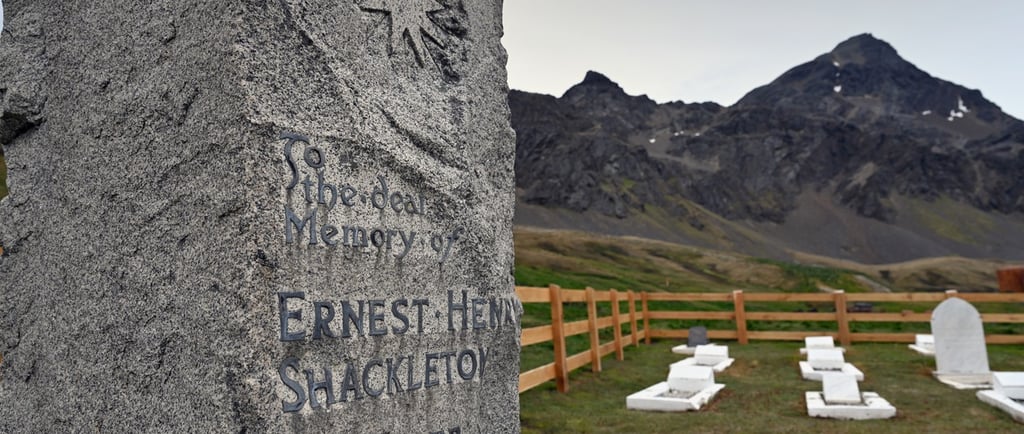
One of our local theatres presented Ernest Shackleton Loves Me, an off-Broadway musical with a 2-person cast written by Joe DiPietro (book), Brendan Milburn (music), and Val Vigoda (lyrics). Kat, a single mom with an infant son, is a creative, struggling composer living on a shoestring. She creates a dating-match video that is seen across time and space by the early twentieth century British explorer Ernest Shackleton. The two, drawn together by technology, develop a deep friendship that morphs into real love.
The genius of the play lies in bringing together lofty notions of virtue—earnestness, courage, fortitude, perseverance, and duty, all of which Shackleton embraces and embodies—and the pizazz of the technological milieu of the twenty-first century reflected in social media, internet domination, and space/time exploration that is observably short on virtue while majoring in commercializing and commodifying relationships. In short, Kat’s life is on the verge of being mired in searching for security and meaning in the widespread and familiar ways that quickly trivialize and betray both security and meaning.
Shackleton’s gift to her is his own example. If you have a mission and a responsibility to save lives, take up the cause and give it your all. For this single mom, this is the message that changes her life’s trajectory.
Joe and I have watched several episodes of the 2020 documentary on Apple TV, “Visible: Out on Television,” exploring how the LGBTQ+ movement made amazing progress in a relatively short period of time through television coverage. Well known LGBTQ personalities like Wanda Sykes, Wilson Cruz, Bill Porter, Lena Waithe, Armistead Maupin, Oprah Winfrey, Don Lemon, Margaret Cho and others unpack how the AIDS crisis in the 1980s and 1990s was pushed into television cameras through the efforts of sometimes a remarkably small number of individuals. The result was that people began to see something besides the celebration of heteronormativity. Real people began telling their stories. Stories moved hearts. Open hearts changed minds and attitudes. Remarkable acceptance and growth followed.
These two examples of artistic genius spotlight quite different messages in some ways. Ernest Shackleton Loves Me proclaims keys to reframing personal experience. “Visible: Out on Television” tracks the elements that together wrought stunning social change through mass communication. Both share the underlying message that persons taking responsibility, using their gifts, staying focused on lasting values, telling the truth, making decisions grounded not in popular opinion but in deep moral consciousness can reshape life on both personal and global scales.
The sacred writings from many traditions are bright with gems reflecting the same light and truth. Ghandi believed that one individual, prepared to suffer without striking back, was more powerful than the Empire. The spiritual discipline of the individual could thus be multiplied and used by masses of people.
Rosa Parks comes to mind as an individual who was thoroughly unsung when she refused to give up her seat on a Montgomery bus in the early days of the Civil Rights struggle. Unsung, perhaps, but prepared. Committed. Convinced. She died while I lived in Washington. Thousands thronged the Rotunda of the Capitol where she lay in state.
Ubuntu grew out of the struggle against apartheid in South Africa. But before it was a mass movement it was an individual, then a handful of individuals, then a small group that grew larger until it became the watchword of a culture.
At one point in my career, I was quite conflicted about whether to accept the call of a parish to become their rector. I had feelings of extreme uneasiness about it. Then I read one morning before a day of interviews the passage appointed for Daily Morning Prayer. A verse I didn’t remember ever reading, let alone paying attention to, was tucked into a string of anecdotes of the Preacher in the Book of Ecclesiastes: “There was a little city with few people in it. A great king came against it and besieged it, building great siegeworks against it. Now there was found in it a poor wise man, and he by his wisdom delivered the city.” [Ecclesiastes 9:14-15]
I suppose I could have finished the Office, shut the Bible, sighed and thought no more. But for some reason that image of one lone person up against great odds seemed to me to be a nod from the universe that even if I felt like a lone wolf against impossible odds, mine was neither a call to be comfortable nor an offer to have an easy job, but to be a person if not wise innately, still informed by a deeper Wisdom.
“Visible” highlights the role of key individuals whom we can now identify as having outsized impact on the course of LGBTQ+ rights. Phil Donohue is one, whose insistent courage to include the stories and the voices of real live individuals on his talk show had an enormous effect of changing the societal narrative about sexuality and gender.
Oprah has been another, whose dedication to use for Good her burgeoning popularity and accompanying public trust catapulted thousands of viewers into new understanding and resulting force for change.
Young, relatively unknown actors were among the first to depict the crises of gay youth, and in so doing, gave hope to countless adolescents who saw their lives truthfully depicted on screen and felt their worth thereby authenticated. Those actors were selected because single individuals in organizations behind the programs and shows they delivered over TV were willing to take risks, use their influence, and forge ahead.
It was never easy. Pushback came. Angry people spewed vitriol and disgust. And the story only got worse once people were gaslit by politicians and demagogues advertising hate and recruiting violence.
Notice that people like Donohue and Oprah had a choice to dodge sticky wickets and thorny issues. They chose to use the power that they had to effect change.
We need to get this message across—without embroidery or a string of footnotes and caveats, a message that can undergird our commitment to translate hope into action. Find your gift and use it. Find your voice and declare your truth. Shutting your mouth is an option, for certain: an option that you can surely justify on any one of many bases. But it will not contribute to the massive building of a community of justice, nor a government that honors the integrity of every single soul.
If we want a better tomorrow, take a good look in the mirror. What is reflected there is the starting point.
Everything must start somewhere. The ball is already moving but the outcome is not yet assured. If you are waiting for your chance, this is it.