Frank DuNN: Conversations at the junction of faith and politics

The Big Reveal
"Never has there been a time in my fourscore years when the example of Jesus is more needed than the present. I’m far less concerned that the Church be theologically pure than that it be effective in creating and growing the kind of beloved communities that incarnate and reveal the love, power, compassion, and justice of God."
Frank Dunn
1/9/20268 min read
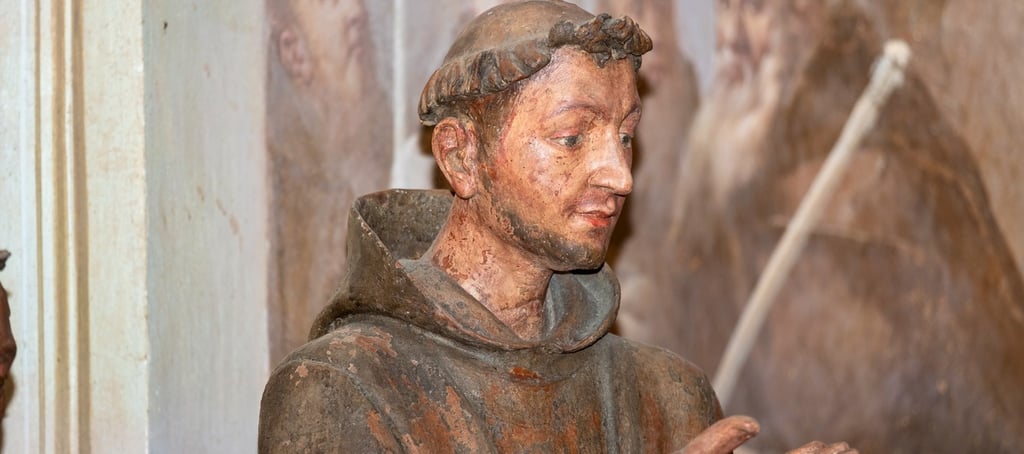
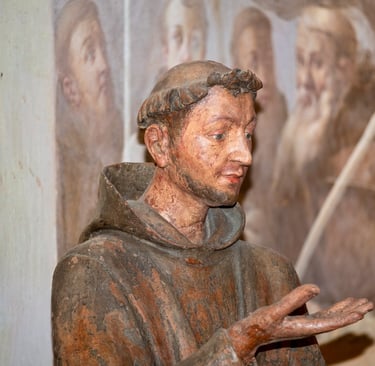
Over the years, my understanding of Jesus has evolved from a childhood understanding of Jesus as a loving, friendly spirit, to an adult understanding of Jesus as a loving, friendly spirit.
Let me unpack that.
To start with, one’s understanding of any person, whether contemporary or historical, is rarely simple. Take your parents, for example. You presumably know or knew them (or people who served you in the parent role) well. But it is impossible to imagine that any child doesn’t soon see that her parents are multi-faceted. It was so for me, not only with my parents but with Jesus.
I’m writing about this now because I’ve been thinking a great deal during this season of Advent-Christmas-Epiphany about who I understand Jesus to be. I have long memories of becoming acquainted with Jesus. As a kid, I knew the conventional story of his birth, some of the major incidents in his ministry, and his passion, death, and resurrection. Not until high school, however, did I begin to get beyond interpreting on a purely personal plane the formulaic descriptors of Jesus as “Savior” and “Redeemer." I’m not saying that in going “beyond” them I renounced or otherwise dropped them. I just began to see that there was a whole lot of Jesus even in the gospel accounts that spilled over the borders of Savior and Redeemer. Certainly I began to see that my having a pious relationship with Jesus was not the only thing implied by the Bible stories about him.
Nowhere is that truer than the way I began to understand the birth narratives. A sweet little baby, born to a mother and an “earthly father,” knowing from the get-go that he was a special, indeed divine, boy: there’s much more to the story that that— more than manger, angels, shepherds, star, and wise men. Matthew and Luke have different reasons for telling their distinctly different birth stories, but both coalesce not in narrative details but in the overarching assertion that Jesus’ birth was the radical intervention of divine action in human history.
Luke quite carefully sets the context for the birth the Roman Empire’s edict-prone rule of Palestine. There is no external evidence of “a decree from Caesar Augustus that all the world be taxed,” nor did the census when Quirinius was Governor of Syria happen early enough to coincide with Jesus’ birth. No matter. Luke’s point is an anti-Caesar appeared in the form of Jesus. His gospel reveals how Jesus in many ways was not only the counterpoint to the modus operandi of Roman rule but the source and proponent of constructing human society entirely differently from the power dynamics of either Judah’s religious elite or Roman State authority.[1]
Matthew places Jesus' birth within the heritage of Moses. In doing so, he constructs his gospel and his approach to Jesus’ life and work as the initiation of a New Covenant with Jesus as the new Law-giver. Matthew’s “Sermon on the Mount’ in chapters 5-7 sets out the contrast clearly: “You have heard it said... but I say to you” is a repeated form. Those interested in a snapshot of Jesus who is anything but “meek and mild” might ponder his attack on the religious establishment in Matthew 23. He is more than a copy of Moses, for certain.
Move forward to the development of what Matthew Fox calls “The Cosmic Christ,”[2] building on a theme advanced by the mystics Julian of Norwich, Meister Eckhart, Hildegaard of Bingen, and others. Long before those mystics, the Cappadocian Fathers, Eastern theologians including Basil the Great (330-379), Gregory of Nyssa (c. 330-395), and Gregory of Nazianzus (329-389), were sculpting the doctrine of the Trinity, clearly seeing Jesus through a wider lens than a human known in history. Whether this is a development that you personally like or not, the fact is that these fourth century men, all born within a few years after the Council of Nicaea (325 CE) were articulating the place of Jesus Christ in relation to the Eternal Divine. In other words, Jesus became God.[3] Bear in mind that these developments were as remote from the time Jesus lived as 1726 is from the present moment. Much had happened then as much has happened in the 300 years immediately preceding you and me.
Put all this together and what emerges is an understanding that the “Incarnation Cycle”—Advent through Epiphany—is about far more than historical events. Advent connects Jesus’ birth with his coming again in power and great glory. His birth, however and whenever it took place, was a historical event apart from the imagery surrounding it in the two stories we read in Matthew and Luke. His coming again, however, is in the realm of myth which might or might not take historical shape at some future point in history. Unless, that is, we choose to see the “Second Coming” as an ever-present reality in which we are participating. If it is that, how so?
Among all the speculations about the Second Coming of Christ, the dominant theme is that it will be “a Day to whose clear, shining light all wrong shall stand revealed, and justice shall be throned with might and every hurt be healed.”[4] Christian imagery of that Day draws heavily from the Hebrew prophets who imagine the Day of Yahweh as a day of triumph of righteousness (right relationships) and above all, the ultimate affirmation of justice and equity.
This imagery functions to awaken hope and stir up resolve to usher in this Day of God, boldly working to “prepare the way of the Lord” and “make his paths straight.” That’s a far cry from baking fruitcakes and doing Christmas shopping. Advent’s message is consistently to get in the game, to work to realize that vision of the Promised Day of God.[5]
If you see things through this lens, then eventually—I speak for myself—incarnation becomes not just something that happened in Bethlehem ages ago, but what can (I’d say must) be the realization of that dream when “knowledge hand in hand with peace shall walk the earth abroad,” righteousness (not just personal purity but pervasive social justice) becoming expressed by and throughout human experience. And if that is the case, the future Coming is being pulled into the present as we join with God behaving as if that day is already dawning and we determine to rise and shine to greet it and be wholly a part of it.
That’s a dream, alright. A big one. And this is where faith and politics need to have a serious conversation. By faith, I don’t mean a particular style of faith practiced by Christians or even by generally religious people. I mean faith on the part of people who believe in the ultimate worth of making the apparently impossible vision become reality. And by politics, I mean the tools of societal change to make this vision of justice and right relationships a reality.
If that’s what Advent and Christmas are about, then what does Epiphany have to do with this vision?
Four stories of key events in Jesus’ life together weave the rich tapestry of Epiphany. The Epiphany means “The Revealing.” The Big Reveal of the Nature of Jesus is told first by Matthew when the wise men following a star they associated with the birth of a king, appeared and announced that the young Jesus was indeed the one to whom the star pointed. Because that is the first story of people outside the Jewish community recognized and affirmed Jesus’ nature as unique, the epiphany to the Magi becomes in the Tradition “The Revelation of Christ to the Gentiles.” The second revelation is told in the Synoptic gospels’[6] account of his baptism. Each reports that the baptism inaugurated his ministry. All agree that he identified with the movement created by John the Baptizer, and all agree that the baptism was the occasion when he was revealed to stand in a unique relationship with God as God’s son. The third story, told in Chapter 2 of the Fourth gospel, is that of his first “sign” (of his divinity), changing water into wine at a wedding in Cana of Galilee. The story ends with the declaration that “his disciples believed in him then.” The fourth great epiphany is celebrated as the climax of the season of Epiphany. It is the Transfiguration, reported by the Synoptics. They say that Jesus went up what tradition later held was Mount Tabor, a high mountain towering above the Plain of Meggido, where the three disciples in his inner circle, Peter, James, and John, witnessed a transfiguration of his physical presence and heard the affirmation of him as the divine Son of God.
It would be easy to appropriate each of these stories concentrating on the specialness of Jesus, ignoring the way these epiphanies comment not just on the divine nature of Jesus but his humanity. Indeed, these have often been understood as manifestation of his divine nature. Yet is seems to me that it is exactly the “divine affirmation” of Jesus in each of these stories that underscores the critical and sacred quality of the ministry he did. That ministry was characterized by very human things: feeding, teaching, healing, preaching, and manifesting the love of God in the way he treated people. He clearly sided with the poor, the dispossessed, the marginalized, social outcasts, and misfits. Equally clearly, he drew sharp lines between his approach to human need and community and that of the religious establishment. He quite clearly did not espouse worldly power, political status, financial possessions, nor any of the things associated with temporal authority or advantage.
All this says that the Epiphany is not so much about what Jesus was revealed to be, but what Jesus himself revealed to the world: what he called “the kingdom (realm) of God” marked by caring, compassion, justice, and love. Stories in the Synoptics as well as theological discourses in the Fourth gospel continually show that Jesus’ entire self-understanding was modeling how to live the Life of God in the world, as he continually called, dared, challenged people to “follow” him, emulating his example.
Never has there been a time in my fourscore years when the example of Jesus is more needed than the present. I’m far less concerned that the Church be theologically pure than that it be effective in creating and growing the kind of beloved communities that incarnate and reveal the love, power, compassion, and justice of God.
Is this just a roadmap for Christians? Not if Christ is cosmic, and in my view Christ is just that. The vocabulary of this or that tradition, however important it is within its own milieu, is not what can or will bind us. It is common purpose and common endeavor that will.
[1] Marcus Borg and John Dominic Crossan make a detailed argument that this is the thrust of the birth narratives in their book, The First Christmas: What the Gospels Really Teach About Jesus’ Birth (HarperOne, an imprint of HarperCollins, 2007). A deep exploration of the sources and texts associated with Jesus’ origins is John P. Meyer, S.J,. A Marginal Jew: Rethinking the Historical Jesus, vol. 1 (New York: Doubleday, 1991).
[2] Matthew Fox, The Coming of the Cosmic Christ: The Healing of Mother Earth and the Birth of a Global Renaissance (San Francisco: Harper & Row, 1988).
[3] For an interesting analysis of the Council of Nicaea and its dynamics from outside the Christian narrative, check out Richard E. Rubenstein, When Jesus Became God: The Struggle to Define Christianity During the Last Days of Rome (New York: Harcourt, 2000).
[4] Frederick William Hosmer, "'Thy Kingdom Come,’ on Bended Knee the Passing Ages Pray,” The Hymnal 1982 (New York: Church Publishing Corporation, 1985), 615.
[5] I personally love baking, shopping, and gift-giving, as well as lots of other things associated with “the holidays.” But the topic of Christmas and culture is another topic for another day.
[6] Matthew, Mark, and Luke are called “synoptics” because they “see together,” i.e., report many of the same incidents. All of Mark is included in either Mathew or Luke, but another source known as “Q” is the source of other material different from Mark that Matthew and Luke share. In addition, Matthew has some of his own sources, as does Luke. John, the Fourth gospel, has some material from the other three, but stands apart from them in much material, a different time line of Jesus’ ministry, the nature of the narrative itself which is much more symbolic and theologically reflective, and emanates from a later period, it is generally supposed but not by all scholars.