Frank DuNN: Conversations at the junction of faith and politics
The Curse of Being Right
Having the right answers is not necessarily going to heal either us or the flawed world we live in. But there is another possibility if we are willing to reframe the way we see.
Frank Dunn
3/24/20267 min read
I write a lot on this blog about justice. Let me say something I don’t write so much about. Openness.
I could call it by many a word. Openness. Non-defensiveness. Pliability. Receptivity. Doubt. Skepticism. Listening. Indecisiveness. Uncertainty. Wonder. Awe. Questioning. Risk. Trust. Gentleness.
The first several words on that list would probably make it play well as a TED talk, don’t you think? Until you get to doubt. Or maybe indecisiveness. (To be honest, I’ve never ever thought of myself as indecisive, nor have I ever liked the word. Nor have I ever enjoyed dealing with people who proved to be indecisive.)
And that’s precisely the point.
I specialize in being clear or at least trying to be. The problem is not clarity, but what gets sacrificed sometimes in the effort to be clear. The fuzziness gets shaved off. The messiness gets thrown out, the dirt vacuumed up. And what’s left is sterile.
But nothing in this world that’s sterile produces anything. It only keeps, or attempts to keep, things from growing.
I know better. Or at least I think I do. I know that this planet I live on is never going to be flawless. It’s never going to be free of all the things that militate against life. And, so far, the data is persuasive that human beings seem bent and determined to find ways of spoiling even the good things we’ve created.
Baking bread a few days ago taught me how true that is. I’d found a recipe for pumpernickel bread, thanks to the know-it-all AI. I laid out all the ingredients and proceeded to follow the recipe. At the end of the mixing, one ingredient hadn’t been included: a third of a cup of oil. I’m glad you didn’t hear what escaped my mouth. I marched back to my computer, opened fire on AI, and pertly suggested that I’d have to throw the whole wad of dough out and start over all because Smarty Pants had given me a faulty process. “No, no, no,” cried AI. “All is not lost. Go ahead and bake it. It will probably be denser than you’d desire but give it a try.” I complied. The resulting pumpernickel—my first baked boule—turned out to be not only good but fantastic.
And I had almost thrown it out because it was flawed. Ita procedit humanitas.
A problem for what I call “prophetic” religion is that it sometimes has a hard time accepting the frustrating fact that we are all flawed. Not damned, not irredeemable, just annoyingly flawed. You see, the assumption of prophetic religion is that people can be persuaded to do the right thing: beat their swords into ploughshares, for example, their spears into pruning hooks. I’m not giving up on prophetic religion. “Prophetic,” the way I’m using the word, essentially has to do with reforming relationships all the way from macro to micro. Put me down for that.
Peace among nations and among people is the kind of thing that prophets—seers—can visualize. It’s a great example of something that can happen only if relationships are reformed, renewed, and refined. It becomes the agenda of prophets to convince their hearers to grasp what they visualize and proclaim, and make it happen. I can go along with the prophet who promulgates peace. I believe sincerely that the time for mothballing armaments is way past due. But mothballing doesn’t mean obliterating. Nor does it remove the possibility that somebody down the pike is going to revive the fight and thus find an immediate need to reinvent the implements of warfare. We’re finding that out daily as alliances are trashed and peacemaking is mocked and bombs dropped.
Insofar as I identify with prophetic religion—most of my preaching, writing, and teaching over my career have been examples—that mindset has fed and reinforced my most overwhelming challenge: perfectionism.
My biggest existential crisis took place three decades ago when I began what I often call “My Second Coming-out.” What bore a hole in my soul was not the truth that I was and am gay, but that the carefully constructed wall of protection reining in my sexuality was crumbling. Everything I knew, believed, taught, and trusted sanctioned that wall of protection. Priesthood; marriage; spiritual practices such as prayer, confession, attempts at meditating: all those things buttressed my lifelong project going back as far as I can remember, at least as far back as the age of three. I wanted to be the best little boy ever. I avoided doing anything I was poor at, like sports. I loved getting rewards, and, by the time of school age, was rather tired of getting spanked. I conformed. And when I became a man I didn’t put away childish things. I imported them into my grown-up image.
My heart broke when I realized I just couldn’t do it anymore.
Along the pike a couple of things had offered some counterpoint to all that. One was “EFM,” the theological reflection process I mentored for more than a decade in my thirties and forties. I was converted to the idea (the truth, really) that if there is a God, it is the God who shows up in our experience. Not just in the sanitized experiences, but also in tawdry, sordid, disappointing incidents and events. God shows up in brokenness, incompleteness, tragedy, defeat, and above all in suffering.
The other thing that flipped my script forever was a three-year stint in Jungian analysis. I got into it not because I was in crisis (or so I thought), but because I knew I couldn’t go on forever without understanding myself better. Working with a marvelous analyst, I discovered that the purpose of my life wasn’t to be perfect, or even good. It is to be whole. And I couldn’t be whole unless I claimed every part of myself, including all those parts of me that were buried in the cellar of my soul. Including, ironically, my proclivity to perfectionism.
I began to understand what I think I’d never really believed as I read Jesus’ words, “Your faith has made you whole.”
And that’s where I began to find the limit of prophetic religion. The faith, devout enough to be sure, that sees the world in black and white, good versus evil, perfect versus imperfect is inadequate to embrace things and people without judgment. I haven’t given up the drive, the deep desire to leave the world kinder, more loving, more peaceful, more just than I’m finding it to be. Yet I realize that there’s no way to do that unless I’m at least open to claiming every part of the world and its inhabitants, not just those that agree with me. What I have learned about being a whole person applies to the way I approach the society I live in.
I wouldn’t be writing this to you if it weren’t a live issue with me. I can’t read stories about the bombing of a girls’ school, or the killing of dozens, hundreds, thousands, of people who are no doubt a mix of good and bad characters, without boiling with rage, being overwhelmed by sorrow, becoming furious at the heedlessness, senselessness of it all.
How to be dedicated to peace and justice without thinking in my old way of seeing only the stark difference between good and evil, I’m unsure. But I think I am discovering an alternative way.
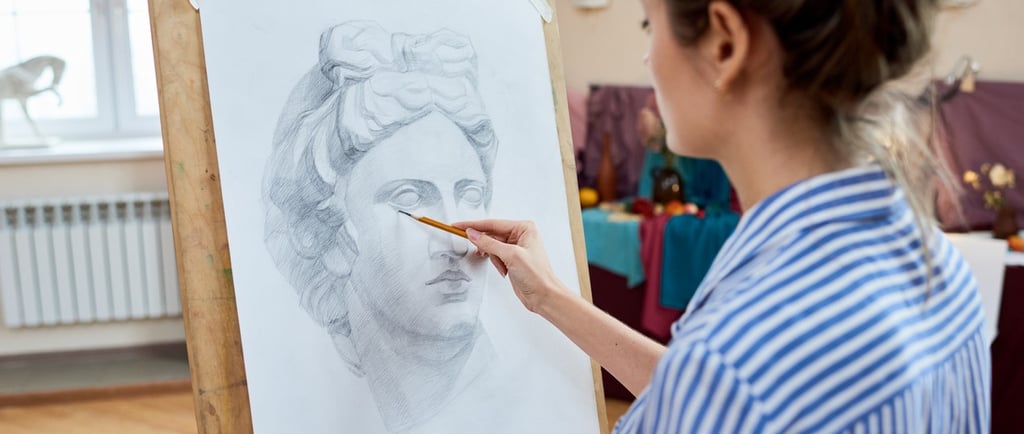
I’ve had a practice this Lent, one that I haven’t been very good at keeping up, but valuable nonetheless. I’m reading a book I bought about forty years ago but never read. It’s called Drawing on the Right Side of the Brain, by Betty Edwards. I’m reading it because I’m in a group of men practicing drawing. One friend, when I asked him how he drew so well, told me that that book had been the key to his learning to draw. I pulled out my copy which I’d kept after all the downsizings through the years. The secret: draw what you see, not what your rational mind thinks it sees. And what we see when we look at anything are shapes, lines, and forms that present themselves to us in landscapes, objects, faces, and bodies. We don’t “see” books or shelves or flowers or trees or mountains. Our left brain—our processor—makes sense of those impressions. But learning to draw on the right side of the brain is to look for the unaccentuated, the assumed, the underlying structures, the relationships of lines and shapes. Draw what you see, not what you think.
Some people do that intuitively. Others of us have to learn. Many of us give up, saying, “I just can’t draw,” the same way we say, “I’m only human,” as if somehow that is a curse rather than a miracle.
I think you might understand what I’m driving at. Being certain can be fine, but it can also be very, very limiting. In a world that constantly tests patience and mocks decency, celebrates violence, and glibly supposes that wiping out an enemy could lead to something besides hardened hatred, it’s counterintuitive to imagine that being open, flexible, and all that could be worth a continental damn.
But openness isn’t about playing nice with evil nor about making sham peace with oppression. Nor is openness only about trying to reach consensus with intransigent enemies. It is about taking the risk of drawing from as well as drawing on the right side of the brain. It is the possibility of seeing what the rational, committed, programmatic, dogmatic side of us doesn’t easily or even likely see. It is, in James Broughton’s words, seeing “life as adventure, not predicament.” It is viewing everything as an experiment, not as a problem to be solved. It’s swapping the burden of being right for the freedom of being vulnerable. It’s trusting that everlasting arms will bear up not only the lightness of Being but the heaviness of tragedy, trusting that what we imagine already exists, that the whole is not the sum of the parts but their transformation.